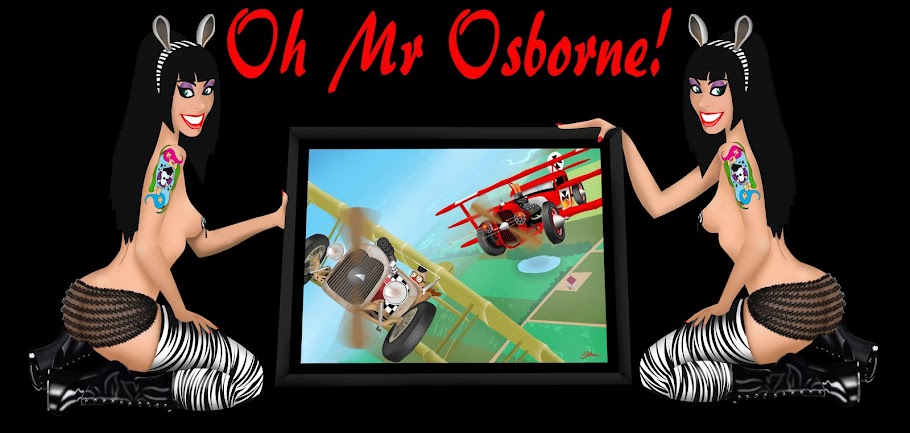
Digital art.
We see it everywhere... even in the 'lowbrow' art scene. There are some very talented artists that many of us know and admire that use such tools as Photoshop to either enhance or create their art. Yet, from what i can see from my own experience and talking to others is that often it is not seen as 'real art'.
I believe this comes from ignorance firstly, about just how digital art is created. It seems people think that this art comes from some dude sitting at the computer, using a program to cut and paste images and somehow 'viola', the fancy photoshop or corel transforms the image into some wonderful piece of art.
Now don't get me wrong, the people love this stuff for the image. BUT...
Let me give you an example; Recently i was at an opening of lowbrow art. I could overhear one artist and an attendee discussing a new artwork on display. Very positive comments until when asked 'Is this the 'original' ? And when the reply was, 'this is a digital artwork'... a sudden pause follwed by an audible ''ohh'' in hushed disapointment. This artist is very very talented in the use of Acrylics, oils and ink as well as photoshop, and had a number of oil paintings displayed as well. As soon as it was found to be a digital print and not an 'original', the magic was gone.
And this brings me to the second problem in perception, the 'original'.
A digital artwork can have no true original. It is not painted on paper, wood or canvas and as such there cannot be a 'tangible original' to buy, take home and perhaps brag over getting. The digital image has to be printed on something, be it, a number of forms of paper, canvas or tin, in laser jet, inks or giclee etc. But no tangible original for it can be done over and over and over again, each image the same as the last.
Even an image drawn in ink, scanned in and colorized digitaly, framed on a gallery wall is not an original for the very same reasons.
Neither can numbering the prints, in my humble opinion, add any significant value or perception to the digital artwork. Let me explain... Say an artist creates a digital masterpiece and gets 50 copies ran off however they decide to do it. They then decide to number these 'limited edition' prints to make them be valued and sought after more than an 'open edition' print. The open edition print, as the buyer is aware, can be reprinted endlessly! But the limited edition... ah...thats only 50! And you may feel lucky enough to have got number 1 or 10 or 7 etc. What you don't realize of course is that number 1 may not be number 1, or 7, the true 7th print. So there is the artist signing and numbering them when they spill coffee on numer 7, so that gets put in the bin and what was really the eighth of the press gets called 7... or they drop the whole box jumbling them all up and print 40 ends up on top getting labelled 1/50! You see, they all look the same! Anyway, taking this further, they now have 50 numbered prints ready to sell and one day they notice that 8, 9 and 10 are creased and damaged... so they go and get 3 more printed (51 to 53 in reality) and re-label them 8, 9 and 10! You don' know this happens!
So where is the point and value of a limited edition print of digital art? And are they really limited? I have seen prints labelled such as this: 'series 2, number 4 of 50 limited edition'...! WTF! The artist sold the first 50 to eager buyers, seeks to reap more $ so re-issues the artwork as series 2! I would be pretty pissed off if i had paid top dollar for number 1/50 to find this out.
For a digital artwork to have any real value as a limited run print, the original digital file and all copies would have to be publicly destroyed.
But how to overcome the negitive perception of digital art?
Some people dont realize they are looking at digital art, some artists may deny using the computer, some attempt to add legitimacy by doing a 'real' painting exactly like the digital piece. But the real key i think is EDUCATION. Sure, let me admit i like originals too. I buy other artists originals from time to time myself. Sometimes i can't, it may be sold or more than i can afford...so i buy a print. I like the picture, i buy a copy.
What i think the buying public and perhaps some artists too, dont realize, is that most often than not, the artist first has to draw the picture. They have to labour over the lines, the perspective, the balance, the expessions etc before scanning into the computer, maybe it's pencil, maybe it's ink it in first, then scan. They have created the basic artwork. Now if they offer that for sale punters may want to snap it up. If they then colorize, shade and tweak in photoshop, take the file to the print shop and run off some really good quality prints and offer that, it seems the value is not there anymore!
What would the 'masters have' done if they were alive now? Make no bones about it, if Da Vinci had a photocopier he would have used it! Some of these guys had teams of apprentices doing and finishing paintings for them. They then signed it as theirs. Even in Roth's day, the same was happening in truth. How many artists that we read about in the lowbrow scene have worked at Roth Studio's? What is screen printing on T shirts and paper if not the 'old way' of making copies of art? Sure, that's a great method, maybe the 'authentic' old school method... but before that, guys were mass producing monster art on T's via the airbrush. Few do that now...screen printing by outside chinese companies is cleaner and cheaper! I think if Roth or any of the great lowbrow fathers had photoshop and modern print methods they would have knocked out pictures and copies faster than rabbits breed.
What printing of any artwork is, whether of a digital or traditional method is, aside from the artist trying to make a living, is the making of art AFFORDABLE. I can't afford to buy an original Weesner but i can afford a print.
What i must admit to not understanding is that an artist can draw an image and then choose to paint it in oil or photoshop. They still spend two days scribbling and drawing and maybe 60 hours painstakingly brushing on paint or manipulating a Wacom tablet, to find people seldom buy the art on display because they don't like the medium used to create it. Perhaps they won't buy it because they can't tell their friends how they scored the one and only of it...i don't know! For me i tend to produce digital art partly because it also makes my art affordable. I know i can't sell a digital image, nicely framed etc for more than a couple of hundred. But thats the advantage to the buyer! If i produced the same image as an oil painting, the ask may be into the thousands...
When it comes to images of artworks on the internet, we are happy to right click and save, buy a magazine for a picture by some favorite artist and even buy a print at a stall at some event. What we have got is a copy. And yet, if an artist fills the walls of gallery with framed prints (and frames are not cheap) they are not so appreciated, and even less so if they are digitaly produced images.
Now i hope this page does not come accross as sour grapes! Maybe people just don't like digital pictures, just like some don't like watercolors or pastels...but i have seen it with others also who are loved for the oil paintings but not their other skill in photoshop. I have seen artists worshipped who produce digital artwork too, perhaps it's because they have been heavily promoted by the right people. On the occasions where a digital artist gets recognized or featured in a magazine for their talants it is truly marvelous! Another step to this newest medium being accepted for what it is...art.
I'm not poo hooing originals either! I like originals as i have said, i produce oil paintings too, i buy originals... I get it.
I pay a lot (to me) for these originals, and i ask what i think is a fair bit for mine. They look great! They can be a touchy feely thing, the textures the smell, the size...
I understand collecting originals that may be of some huge investment value too. But we are not all destined for such greatness and just want to create art!
But digital art, no 'original' as such can be fantastic too! And the asking prices are generally low as well.
All the better for the buyer!
Buy more art for your buck!!!!
Mr Osborne
